
June is Men’s Health Month!

Did you know that June is Men’s Health Month? Despite the incredible improvements in health care worldwide, men’s health education is often overlooked or inadequately discussed. At Trilogy, we’d like to shed light on the many ways we can help the men who come into our clinic improve their health!
While men’s health sometimes takes a back seat to other issues, our physical therapists are dedicated to helping treat any condition you may be experiencing. Men have specific health needs, experiences, and concerns related to their gender.
Men’s health is the complete physical, mental, and social well-being experienced by men. Differences in men’s health compared to women’s can be attributed to biological factors, sex organs and hormones, behavioral factors (i.e., men are more likely to make unhealthy choices and less likely to seek medical care), and social factors (i.e., occupations, risky activities).
At Trilogy, our physical therapy clinic is here to address those specific needs and provide you with the best possible treatment methods for you. Request an appointment today!
The importance of men getting wellness checks
Annual exams are essential as they screen men for specific medical issues, many of which crop up as a man ages. These exams assess your risk for health concerns and encourage you to lead a healthy lifestyle.
Often, men have low levels of health literacy. This lack of knowledge can fuel the stigma that many men feel about seeking help from a health care practitioner. Education, specifically, talking in a way the men resonate with, can help improve their willingness to get preventative tests such as a prostate exam.
A prostate exam can help your doctor diagnose an enlarged or inflamed prostate. It can also help them diagnose prostate cancer, the second most common form of cancer among American men. These exams can also help diagnose pelvic floor dysfunction or pain issues.
At Trilogy, we realize that prostate health and, more globally, pelvic floor and abdominal health need to be addressed and normalized. Our physical therapists are trained to provide quality care, addressing a multitude of health diagnoses related to the pelvic floor, including urinary and fecal incontinence, pelvic pain, and sexual dysfunction.
If you’re dealing with a men’s health issue, you should know that you can often resolve it through rehabilitation at our clinic. Your physical therapist will use various treatment methods to provide relief for you, including biofeedback, targeted stretches, and breathing exercises to help you improve and hopefully resolve any limitation you are facing.

Do you have any of these men’s health related conditions?
Pelvic floor dysfunction is defined by the inability to control your pelvic floor muscles (i.e., muscles that support the bladder and bowel and affect sexual function). It can affect people of all genders and backgrounds, and several factors may be causing your pelvic floor dysfunction. A large part of our men’s health services includes pelvic rehabilitation.
Some common conditions we can treat with pelvic rehabilitation at our clinic include:
- Tight pelvic floor muscles. Did you know that your pelvic floor muscles can clench up? There are many reasons why this happens, such as injury, operations, lifting heavy objects, stress, scar tissue, a sedentary lifestyle, and more. Our physical therapists can help determine precisely what is causing your pain and how you can prevent it in the future.
- Prostatitis. This condition results in inflammation and swelling and occurs in the prostate gland. Prostatitis can be caused by a bacterial infection cured through antibiotics. Your physical therapist will create a treatment plan based on your needs so you can live comfortably once again. However, if you are diagnosed with chronic prostatitis, this is a long-term problem that will require more help than medication can offer.
- Prostatectomy. There are several different types of prostatectomies, and you may be experiencing a complication from yours if you’ve had one. Many men deal with pelvic pain or urinary incontinence after a prostatectomy, both of which can be addressed through physical therapy.
- Pudendal Neuralgia. Your pudendal nerve travels through your pelvic floor muscles. If those muscles are too tight, this nerve can become irritated. If this nerve is compressed for too long, you may begin experiencing painful symptoms. A physical therapist can help relieve your pain by loosening up the muscles and providing targeted exercises.
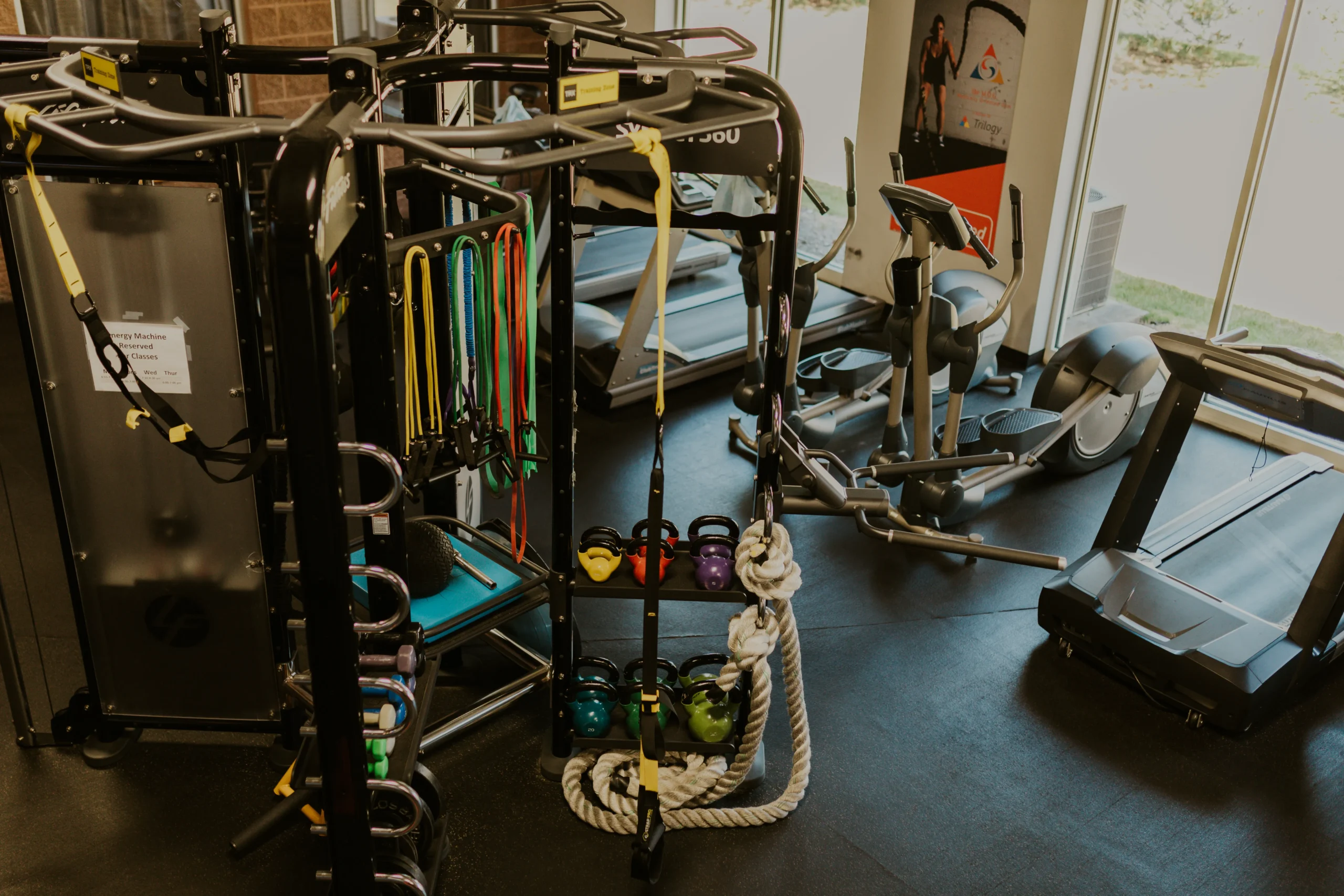
Why Choose MOG?
We aren’t just a gym—we’re an all-in-one wellness destination, designed to support you wherever you are on your fitness journey. Whether you’re recovering from injury, maintaining your health, or setting new fitness goals, we’ve got something for you:
✅ Nutrition Services
✅ Personalized Training Plans
✅ Group Classes
✅ On-Site Exercise Specialists
We provide the tools you need for better health, longevity, and success. It’s more than just fitness; it’s a lifestyle change designed to meet you where you are.
Request a consultation with one of our physical therapists
Are you ready to get your health back on track? Request an appointment today to learn more about our Men’s Health services! At Trilogy, we are here to help you with whatever you may need!

Smart Sun Safety and Hydration Tips
June’s warm weather is perfect for outdoor activities, offering lots of opportunities to boost your physical health. However, navigating the challenges of sun exposure and hydration is crucial. Here’s how you can enjoy the outdoors while taking care of your health:
- Smart Sun Practices: Choose early morning or late afternoon for outdoor activities to avoid peak sun hours. Apply sunscreen, wear a wide-brimmed hat, and use sunglasses to protect against UV rays.
- Stay Hydrated: With higher temperatures, dehydration is a risk. Drink water consistently throughout the day, and always carry a water bottle during outdoor activities.
- Dress Appropriately: Wear lightweight, breathable clothing to keep cool and comfortable.
At Trilogy, we encourage you to enjoy yourself this June but always prioritize your health and safety. Use these tips to ensure a fun and healthy start to your summer!

Recipe of the Month: Smashed Chickpea Salad Sandwich
Ingredients:
- 1 can chickpeas, rinsed and drained
- 1/4 c chopped Italian parsley
- 1/4 c chopped dill
- 1/2 c chopped scallions
- 2 tbsp mustard
- 2–3 tbsp mayonnaise
- Salt and pepper to taste
- Optional: 1 tbsp capers
- 4 slices whole-grain bread or everything bagels, toasted
- 1 tbsp mustard
- 2 large lettuce leaves
- 1 Turkish cucumber, sliced
- 1 carrot, thinly sliced
- 4 radishes, thinly sliced
- 1 large avocado sliced
- big handful of microgreens or sprouts
Directions:
-
Make the chickpea salad, placing all ingredients in a medium bowl, mix and smash with a fork until well combined. Taste and adjust salt and pepper to your liking. Assemble the sandwiches.
-
Spread a little whole grain mustard on the bread. Top with lettuce and a generous amount of the chickpea salad. Layer sliced cucumber, carrots, radishes and avocado.
-
Top with a mound of sprouts and bread. Cut in half and enjoy!
What’s A HEP — And Why Is It So Important to Your Success?
HEP stands for “home exercise program.” If you’re undergoing physical therapy with Trilogy, there’s a good chance your therapist will prescribe one to you. It’s important to note that a HEP isn’t the same as an at-home workout program. With an at-home workout, your goal is general fitness. A HEP consists of curated exercises to help you achieve your rehabilitation goals. We understand that an exercise routine can sometimes be difficult to work into a busy lifestyle. Therefore, we design our HEPs to be as straightforward as possible, with…
- Exercises you’ve done before
- A small time commitment
- Strategies for managing pain, if needed
However, we also want to make sure you understand why we prescribe a HEP at all! In fact, a HEP has multiple benefits:
- It improves outcomes: Patients who complete their prescribed HEP experience faster and more effective rehabilitation.
- It improves muscle memory: This means movements will become easier, and you’ll be able to more easily incorporate additional exercises during your in-clinic sessions.
- It helps develop a good habit: Even after you recover, regular physical activity is essential for good health. By completing your HEP, you get into the habit of moving daily.
In short, a HEP is a small way to make big changes! And if you think you might benefit from a personalized HEP, call us to schedule a consultation.
Sources
- https://www.feastingathome.com/spring-goddess-sandwich/
- https://academic.oup.com/heapro/article-abstract/35/5/1037/5574602
- https://journals.sagepub.com/doi/full/10.1177/1557988317723424
- https://www.thelancet.com/journals/lancet/article/PIIS0140-6736(20)31303-9/fulltext
- https://pubmed.ncbi.nlm.nih.gov/26492389/
- https://medlineplus.gov/menshealth.html
- https://www.physio-pedia.com/Adherence_to_Home_Exercise_Programs